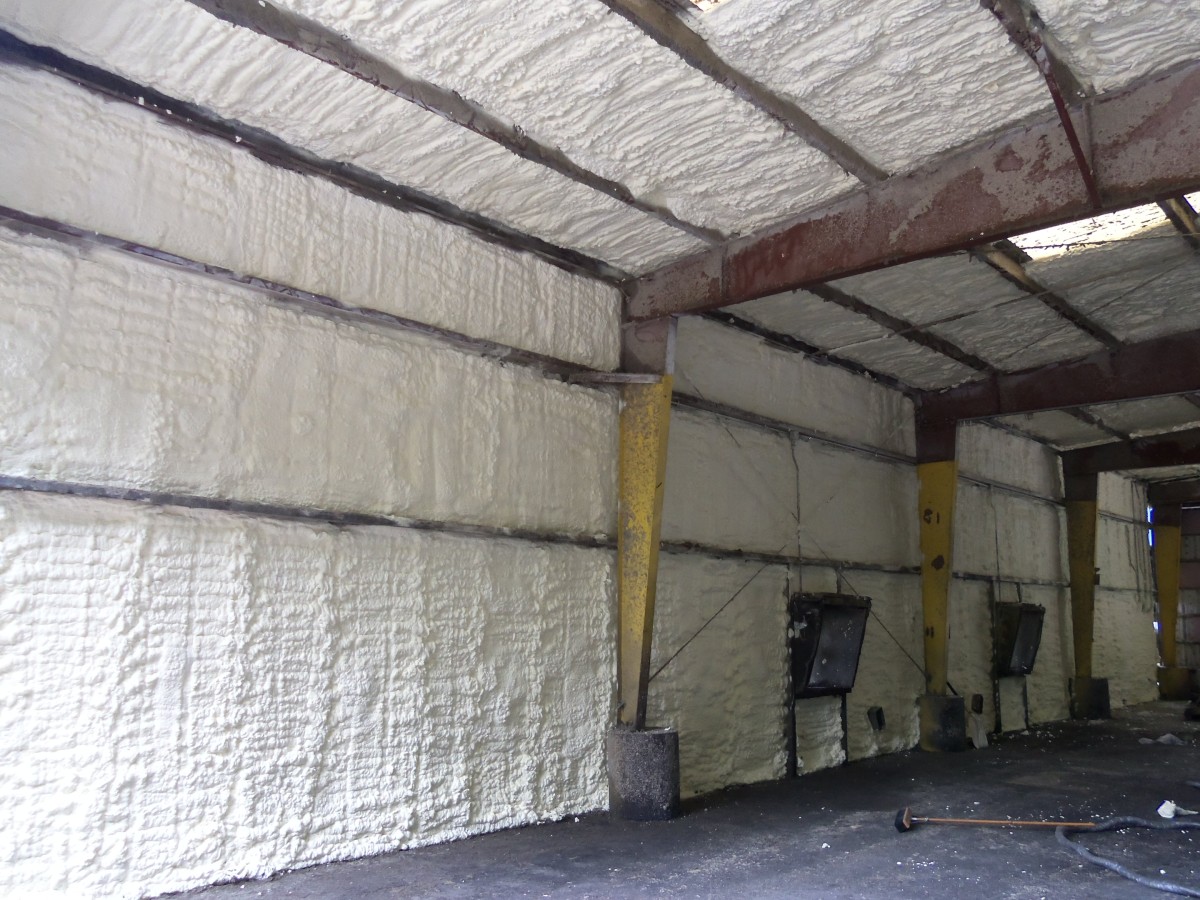
In the 40-plus years in the insulation and metal building industry, the predominant question is, “What is the better choice for metal building protection between Spray foam and Fiberglass WMP-VR-R insulation?” That is not an easy answer, as each insulation type has its own market niche, benefits, and drawbacks. One needs to consider their budget, climate, and thermal efficiency goals. This blog post aims to highlight the features, pros, and cons, as well as when one should be considered over the others, based on the specific project requirements.
Key Aspect of Spray Foam Insulation
If money doesn’t play a role in the decision-making process, one can make a strong argument that Spray foam is the better choice in most applications. Since spray foam is applied as a liquid that expands into a rigid foam, it seals cracks, seams, and gaps more efficiently than WMP-VR-R will. When spray foam is used, you get insulation with an added air barrier. With anything, there are pros and cons.
Here are the positive aspects of Spay foam:
- Excellent Air Barrier: Because it expands to seal cracks and other insulation types don’t, its thermal efficiency is superior. You only need one crack to cause a draft, losing a significant portion of the benefits of installed heating and cooling systems.
- Vapor Barrier: If you choose a closed-cell spray foam, it will resist water absorption. As you are probably aware, condensation on metal building surfaces is undesirable.
- Added Structural Integrity: Because spray foam adds rigidity to a structure by adhering to the panels, your metal building gains structural strength.
- Added Space Availability: Since spray foam is effectively applied directly to the surface, there is some added space savings. Additionally, one achieves a high R-value per inch of application.
Here are some negative aspects of Sray Foam:
- Pay Higher Upfront Cost: There is no way to put it any other way! Spray foam is the most expensive insulation option available for metal buildings. Yes, it will pay for itself in time, but not everyone can or wants to wait.
- Once applied, it’s One There: When you apply spray foam, it’s permanent. Any future panel repairs may be more challenging because foam is not easily removed.
- Deceptively UV-degrading: If sunlight directly hits it, degrading will occur. One must properly cover the spray foam.
- Suggested Experienced Installers: Spray foam is not your average weekend DIY project. One should hire a skilled professional to apply the foam correctly and achieve a consistent thickness.
Key Aspects of Fiberglass WMP-VR-R Insulation
The Fiberglass WMP-VR-R insulation is reinforced with a laminated vapor retarder. Although it is primarily designed for metal buildings, it is often used as a type of pole barn insulation. It also offers a combination of thermal resistance and moisture control.
Positive points of Fiberglass WMP-VR-R Insulation
- Saves Money: Let’s be honest, cost-effectiveness is important to everyone. In a broad sense, upfront, it is less expensive than spray foam for the same coverage area.
- Condensation: After thermal effectiveness, the next important issue is moisture control. WMP-VR-R acts as a vapor retarder, reducing the risk of condensation.
- Lasting Ability: No one wants a product that gets defective soon. The reinforced vinyl facings are tear-resistant to most occurrences.
- Easy To Replace: You can relatively easily replace WMP-VR-R insulation compared to Spray foam without structural disruption.
- Attractive Appearance: Let’s be honest. We all care about appearance since we have to look at the interior of the building every time we enter it. White facing creates a clean, bright interior finish.
Negative points regarding Fiberglass WMP-R Insulation:
- Not the best Sealant: Vinyl faced fiberglass insulation insulation is applied by rolling it over purlin and girts and pinning it down with the sheeting or is pushed in between members; therefore, it does not seal gaps as tightly as spray foam; supplemental air sealing may be needed.
- Awkward Lifting: A roll of insulation can be cumbersome to lift the longer it is.
- Thicker and Bulkier: It will utilize more space for the same R-value compared to spray foam.
- Vulnerability to Tear or Punctures: Though WMP-VR-R facings are reinforced, there is always a possibility of punctures and tears if the impact is great enough.
- Installation Efficiency: Like any installation, if it isn’t done correctly, it will affect the insulation’s thermal efficiency.
Summation:
You should choose Fiberglass WMP-VR-R Insulation if you are budget-conscious, like a clear, attractive finish, and want to tackle the metal building insulation installation yourself.
You should choose Spray Foam if you have the financial resources and want the maximum thermal efficiency.