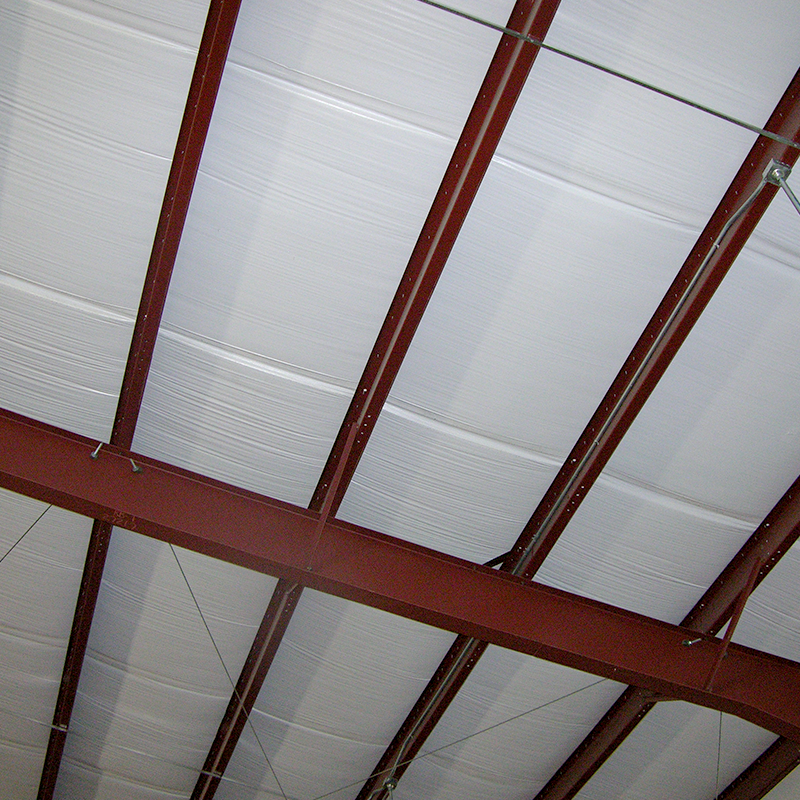
There are specific reasons why people in Northern states choose Vinyl-faced insulation over reflective insulation. Let’s begin by noting that a large percentage of the globe experiences cold climates. Therefore, selecting an insulation that can address these conditions as well as hot conditions is practical. We are no longer in the Stone Age. We can experience indoor comfort by simply selecting the right insulation material.
Although there are many types of insulation, vinyl-faced insulation—which happens to be a type of fiberglass insulation with a protective vinyl vapor barrier—is now the preferred choice over reflective insulation in northern states.
This blog addresses why laymen and contractors are choosing vinyl-faced fiberglass insulation for cold-weather climates over reflective insulation.
1. Better Thermal Efficiency in Cold Climates
When all the dust settles, you primarily want your insulation to slow down heat transfer in your structure. If you are located in a northern location, you will experience numerous freezing days throughout the winter months. Vinyl-faced insulation is specifically engineered to reduce heat transfer. The thicker the insulation, the more thermal resistance (R-value). One can simply request a fiberglass insulation R-value or thickness that matches the environmental conditions of the area.
There is no reason to “sugarcoat” it. Reflective insulation primarily reflects radiant heat away from your metal building. That’s about it! Vinyl-faced insulation is created to tackle conductive and convective heat loss, which happens to be the most common forms of heat transfer in cold environments. Whether you need metal building insulation or a pole barn, vinyl-faced insulation is the practical choice.
2. Better for All-Season
Temperatures fluctuate throughout the seasons. We’ve already established that vinyl-faced insulation is popular in the north; however, it has better year-round performance. This type of thermal insulation not only keeps metal buildings and pole barns warm in the winter but also helps regulate indoor temperatures during the summer months.
On the contrary, reflective insulation or radiant barrier insulation only address radiant heat issues. It is obvious that on overcast days, there are minimal radiant heat issues from the sun, so how can reflective insulation help you?
A smart buyer chooses a consistent, energy-efficient insulation.
3. Stops Moisture
When climates fluctuate between hot and cold, humidity levels also fluctuate. These fluctuations cause condensation issues inside wall cavities. This inevitably will lead to mold, mildew, and insulation degradation if not addressed.
Purchasing a vapor barrier vinyl-faced insulation will protect your metal building. It will act as a barrier protecting the water vapors from affecting the fiberglass. We all know basements and addicts are more prone to dampness. Again, we want our insulation to address heat, cold, and condensation. Vinyl-faced does all thee!
On the other hand, reflective insulation doesn’t have this quality; therefore, it is not the best choice for northern locations.
4. Installation
If you order “Batts” (pre-cut sizes), fiberglass vinyl-faced insulation is lightweight, therefore easy to install. This is why it is considered a popular DIY insulation type for laymen. It easily fits around studs, joists, and rafters. When you order it with a reinforced facing, it will be more durable and resistant to tearing.
It is commonly known that reflective foil insulation requires an air gap when installed, which makes it more complicated. If you have to maneuver around pipes and crevices, reflective insulation may be more challenging.
5. Stand-Alone Insulation
Although reflective insulation is relatively low-cost and most laymen can install it, it is recommended to be utilized in combination with another insulation type (like fiberglass or foam board) in colder climates. That being the case, the price will be driving up!
6. Durability
Let’s be candid, eventually something is going to touch the surface of your insulation if it is not covered by a wall. When that occurs, it is vulnerable to punctures and tearing. Durability matters! At least it does for me! Fiberglass insulation with a vinyl-reinforced facings, such as WMP-VR-(plus), is highly resistant to tearing. Once insulation is torn or punctured, it immediately loses some of its thermal efficiency. Reflective insulation can be easily torn or punctured compared to reinforced vinyl-faced.
Ultimately the choice is yours. Your pole barn, metal building, or home is an investment. Selecting the proper insulation is key to comfort and thermal efficiency. Whether you are located in a northern or southern region, vinyl-faced insulation with a reinforced facing is the practical choice.