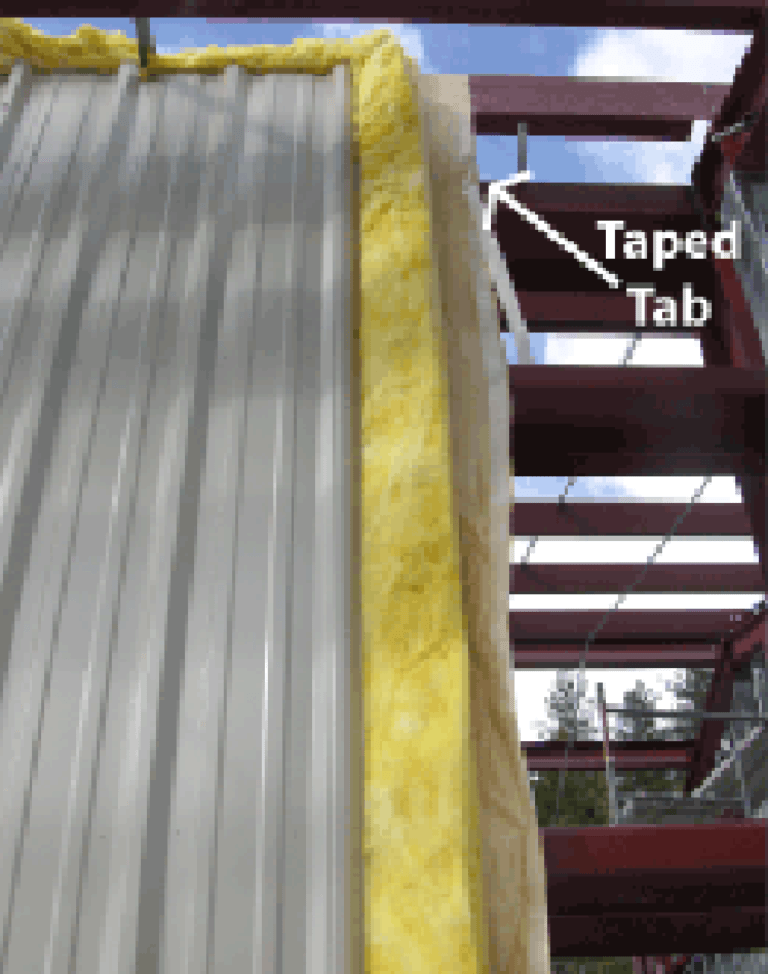
When you are insulating a metal building or pole barn, you want the lowest-priced fiberglass vinyl-faced insulation that is commercial grade. This is possible; however, it works very differently from buying insulation materials at traditional retailers. I will guide you through a practical, step-by-step process for finding lower-cost, commercial-grade fiberglass vinyl-faced insulation (e.g., insulation typically used in large agricultural, industrial, and commercial buildings). Additionally, consider options for low-priced vinyl-faced insulation that meet your needs.
However, we should start by explaining why you can’t find commercial-grade fiberglass-faced insulation in retail: building codes, distribution models, and buyer behavior. I will elaborate:
Commercial-grade, low-priced vinyl-faced insulation is designed to handle different code standards
Most people buying insulation for metal buildings or pole barns choose commercial-grade fiberglass-faced insulation because it is typically designed to meet stricter fire, smoke, and safety requirements than residential products. When someone applies for a building permit, the inspector will specify the applicable standards that must be met.
Here are some standards commercial projects require:
- ASTM E84 (Fire Standard) for flame spread
- IBC (International Building Code) instead of IRC
- NFPA standards for fire resistance
- Specific UL classifications
The problem is that retail insulation stores (like Home Depot or Lowe’s) typically sell only:
- IRC-compliant insulation (only meets the requirements of the International Residential Code, not commercial).
- Simply states: it’s approved for use in residential buildings like houses, townhomes, and certain small apartment buildings.
- A Kraft-faced insulation (which is combustible)
In commercial buildings, industrial, and agricultural construction, Kraft-faced insulation products are often prohibited because they are combustible and can contribute to flame spread. That said, in most cases, the product is simply unacceptable.
Conclusion: Traditional retail stores like the popular Home Depot avoid stocking products that don’t meet residential codes because homeowners legally can’t use them.
Commercial-grade insulation features specialized facings not available in retail stores.
- An example of a popular commercial-facing product is WMP (some laminator labels it PSK (Poly-Scrim-Kraft).
The popular WMP facings (WMP-VR-R+, WMP-10, WMP-30, and WMP-50) are white, reinforced facings laminated to fiberglass insulation. Its primary purpose is to provide:
- A beautiful, clean appearance
- A protective Vapor barrier
- Fire resistance above residential Kraft paper facing
- Meets most commercial building codes
Key differences of a commercial WMP protective facing from residential kraft-faced insulation
- Kraft-faced insulation usually has a brown paper facing (like you see in home basements)
- It is highly combustible
- Usually only meets IRC (residential) compliant
- Rarely accepted in commercial applications
Who primarily distributes Commercial-Grade Fiberglass Insulation:
- Specialized brokers
- Insulation Storage Places
- Commercial building material distributors
- Some HVAC wholesalers
- Manufacturer-direct orders
Large insulation manufacturers intend to keep commercial out of retail channels because:
- Most customers want their cut and made to order.
- Often, insulation must be sold to specification, not by shelf browsing
- Since each project is different, retail-fixed pricing won’t work
How Buy Through a Commercial Distributor low-priced vinyl-faced insulation
Unlike retail stores, commercial distributors stock or have access to a much broader range of insulation products and often at wholesale prices:
One of the best avenues is a Cost-Plus program operated by a former corporate individual who has charted their own course. These individuals have a wealth of specialized knowledge and likely command leverage from their purchasing volume. They are not locked into a specific supplier; therefore, they can access numerous channels to secure the best steel building insulation rates.
An authentic cost-plus insulation broker of metal or pole barn insulation will gladly give you access to their channels if you are a prepared buyer. Here’s how to approach them:
- Look up Cost-Plus Insulation Programs or insulation distributors
- Tell them the specs you need
- Let them know you are a ready buyer
- Ask them how to achieve the lowest possible price above the actual wholesale cost
You may be amazed at how much better their pricing is compared to retail.
Get Competitive Bids
Whenever you are buying a large-ticket item, such as reinforced vinyl-faced insulation, always get multiple competitive quotes.
Steps to do this:
- Send a request to 2-4 commercial insulation suppliers
- Ask for:
- FOB price (before freight). Itemization helps with pricing discernment
- Get the specific freight cost to your location. Ask for the exact mileage to the closest plant.
- If there are any discounts for volume ordering
- It doesn’t hurt to ask if there are any upcoming discount opportunities
Smart buyers, follow these basic but wise steps to purchase low-priced vinyl-faced insulation. They often lead to substantial savings.