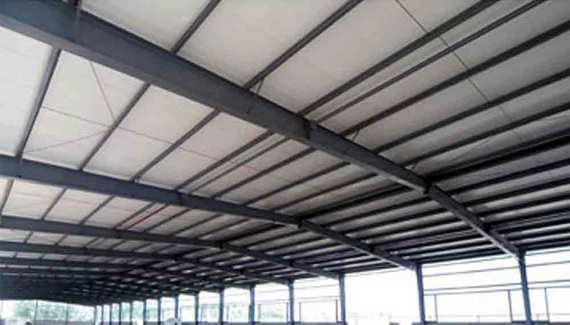
What is the appropriate vinyl-faced or kraft-faced insulation product for your metal building, pole barn, or residential home? The general public tends to think of R-value first. Yes, thermal efficiency, vapor barriers, and comfort are essential; however, the insulation facing you select will play a significant role in the building’s performance and longevity. The two most popular options are vinyl-faced fiberglass insulation and kraft-faced fiberglass insulation.
This article compares the benefits of vinyl-faced and kraft-faced insulation, presenting the differences, advantages, and best uses for each type. This will help you choose the right product for your building.
Let’s learn what Faced Insulation is:
A faced insulation simply means that there is a protective layer — known as a facing — that is bonded to fiberglass insulation rolls or batts. When it comes to metal building insulation, this is key.
Vinyl-Faced Fiberglass Insulation
A vinyl-faced fiberglass insulation is a reinforced vinyl vapor barrier laminated to fiberglass rolls. The best vinyl metal building insulation features a scrim mesh, making it more durable and tear-resistant. This is why it is chosen for metalstructures, warehouses, pole barns, and agricultural buildings.
Here are four popular reinforced metal building facings:
This very popular metal building and pole barn insulation facing is considered Normal Strength, and selected by laymen over the other three facings listed below. This may be because it has a thinner vinyl layer, which makes it easier to roll, cut, and install.
It features a tri-directional scrim, which reinforces the facings. Its tensile strength is approximately 35 lbs. per inch. Although per ratings may fluctuate between laminators, most consider it a 0.9, which is not quite as protective as the other three; however, it is usually priced lower and still meets a Class 1 vapor barrier standard. It also has a metalized polyester back that allows the facing to reflect radiant heat away from the structure.
This facing is considered to have enhanced qualities due to its low per rating. It is often chosen when the insulation facing will be visible, but not exposed to heavy traffic or abuse. The reinforced vapor retarder facing features polypropylene/scrim/kraft paper laminated material. It has a tensile strength of 40 lbs. per inch. The fire rating is a Class A-1. The Perm rating is 0.2, which is considered excellent.
Some note that the WMP-10 is not ideal when it is exposed to sunlight. The UV can degrade the kraft side over time.
Considered industrial strength, this insulation has the same low 0.2 rating as WMP-10, yet offers tougher resistance to punctures and tears. Its tensile strength is 40 lbs. per inch. The Mullen Burst PSI is 70 lbs. Because it has a thicker and more durable facing than WMP-VR-R (plus) and WMP-10, it can be more challenging to manage around curves during installation.
This insulation is the perfect choice for areas exposed to wear and tear, such as retail stores, recreational centers, hockey rinks, gyms, and busy shops.
This insulation facing has Premium Strength. It is the ideal choice for high-abuse areas. It has a tensile strength of 65 lbs. per inch. The Mullen Burst PSI is 120 lbs. per inch. Its fire rating is a Class A-1, and its perm rating is also an excellent 0.2. The metalized polyester back reflects the radiant heat away from your metal building or pole barn.
Often utilized in sports facilities, warehouses, structures with forklifts, tractors, and other machinery. To handle the abuse, the facing is thicker; therefore, it is more difficult to install in tighter spaces.
Pros of vinyl-faced insulation
- Moisture Control: By now, you have probably heard that one of the main purposes of metal building insulation is to prevent condensation and water vapor from penetrating insulation.
- Protection from Tearing and Puncturing: It’s about the durability of your insulation that keeps it functioning efficiently for years. The facing also helps keep the fiberglass intact during handling and installation.
- How it Looks: We all want a clean, finished look within our metal building or pole barn. Vinyl-faced insulation definitely offers you this.
- Fire Protection: The metal building insulations listed above all have a Class A-1 fire rating. It’s essential to purchase facings that provide a safety layer to meet building codes.
Now it’s time to compare vinyl-faced insulation and kraft-faced insulation in detail.
Cons
- Any better, costs more. It has a higher upfront cost compared to kraft-faced insulation.
- It will require sealing at seams to ensure complete moisture control.
- Not really needed in most residential homes because the wall cavities are covered by drywall.
Kraft-Faced Fiberglass Insulation
Simple definition
Kraft-faced insulation uses asphalt-coated kraft paper as the facing. It is widely used in residential homes, especially in walls, attics, and floors. It is perforated, meaning it has small holes within the fabric, allowing the wall to breathe.
Advantages of Kraft-Faced Insulation
- Cheaper in Price
Kraft-faced fiberglass insulation is budget-friendly and can be purchased at Lowe’s, Home Depot, and other similar retailers. - Simple Installation
With stapling flanges, kraft-faced insulation is easy to install between studs or joists, making it ideal for both homeowners and contractors. - Moderate Vapor Retarder
The Kraft paper offers basic vapor retarding for most residential settings. For example, the perforated facing allows walls to “breathe” and reduces moisture-trapping from possible buildup. - It will work in your home
Since most homes have drywall or a similar material, the weaker Kraft facings are protected; therefore, their cost-effectiveness needs to be considered.
Cons
- It is a lighter facing; therefore, it can tear more easily than vinyl-faced coverings.
- Because it lacks the level of perm rating, it is not suitable for high-moisture environments like pole barns or metal buildings.
- It doesn’t have the Class A-1 fire rating. Kraft paper is combustible.
Simply put, choose vinyl-faced fiberglass insulation if you are insulating a pole building or a metal building, where factors such as condensation, appearance, and durability are important.
One chooses Kraft-faced when they are insulating a home, with walls, attics, or ceilings covered by drywall. It is more cost-effective and provides the necessary moderate vapor resistance.